
How early should I get to DCA?
Ninety minutes to two hours before departure covers most domestic flights out of DCA.
Ninety minutes to two hours before departure covers most domestic flights out of DCA.
Want this on your phone? Ready Time sends an alert when it’s time to start each step.
Ready Time
You know what you need to do. Ready Time helps you know when to start.

A maps app covers the drive to DCA. Bag drop, security, and the walk to your gate usually take longer, and they are the steps people misjudge.
Here is the same plan drawn to scale. The first block is travel; the next two are the airport. A checked bag grows one, a far gate grows the other.
Front door to boarding: 2hr 10min
Ninety minutes to two hours before departure covers most domestic flights out of DCA. Checking a bag or flying at a peak hour puts you toward the early end of the range.
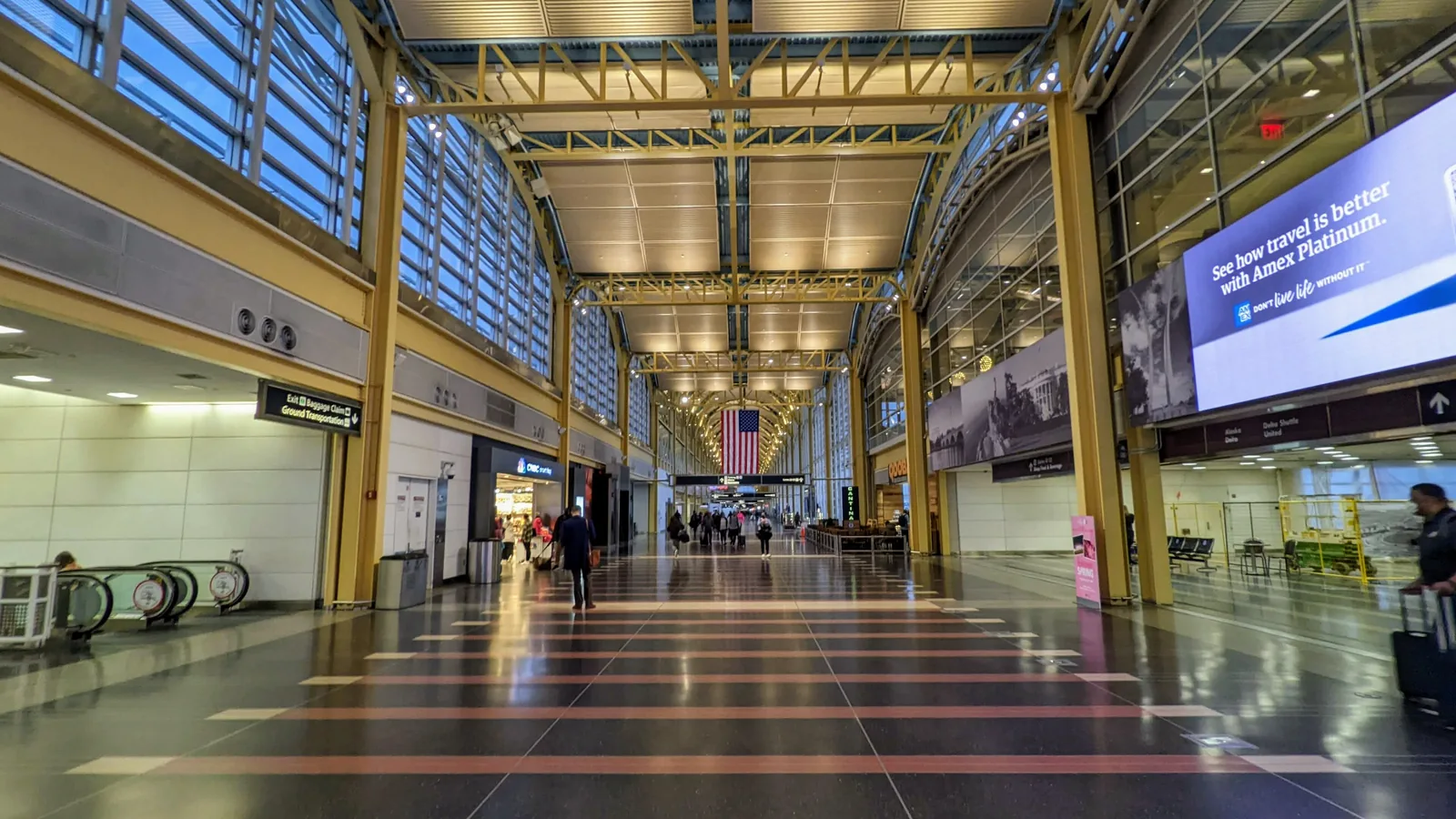
DCA is the rare big-city airport you can reach in 15 minutes, which is exactly why its checkpoint lines catch people who cut it close. Terminal 1 is Air Canada, Frontier and Southwest, Terminal 2 is everyone else, and the two do not connect after security.
The airport is compact and the Metro delivers you practically to check-in, so the fixed costs are small; the variable is the checkpoint at government-travel peaks, Monday mornings and Thursday/Friday afternoons. Inside Terminal 2, National Hall sits entirely within the secure area, so all four of its concourses share one walk once you are through.
The plan allows 20 minutes for a standard lane on a busy but normal morning. With TSA PreCheck, that drops to 10 minutes. A checked bag lengthens the one before it.
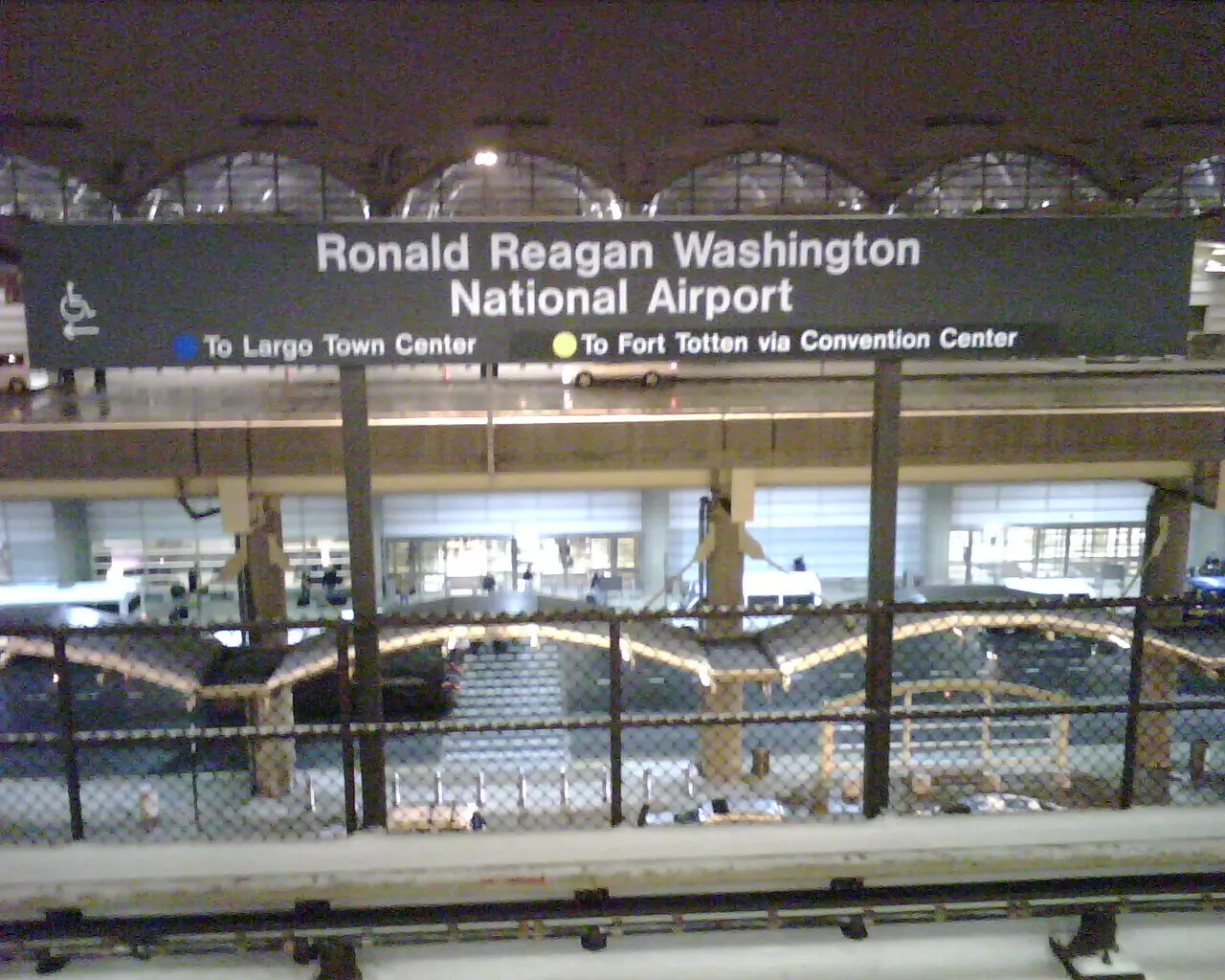
The Blue and Yellow lines stop at the terminal. From most of DC, Metro is faster and far more predictable than the George Washington Parkway at rush hour. The Metro walkways feed Terminal 2 directly, while Terminal 1 is another walk indoors past Terminal 2, or the airport shuttle, so the same train arrival is a longer trip depending on your airline.
For live waits, parking, and terminal maps, check the official DCA site.
Terminals, checkpoints and transit change; the official DCA site is the live source.
Ninety minutes to two hours before departure covers most domestic flights out of DCA. Checking a bag or flying at a peak hour puts you toward the early end of the range. The plan above works back from there through security, bag drop, parking and the drive to a leave-by time.
The plan allows 20 minutes for a busy-but-normal standard lane. With TSA PreCheck it drops to 10 minutes, and you can edit either one to what you actually see. A checked bag lengthens the step before it. Checkpoint detail for DCA is under Security at DCA above.
Earlier than for a domestic one. International boarding starts 45 minutes before departure instead of 30, which pulls every step earlier. Use the airline desk for bags: documents get checked and counters often close an hour out. That also covers lap infants, unaccompanied minors, and oversized bags. If your boarding pass names a boarding time, match that.
Work backward from departure: boarding, time at the gate, the walk, security, bag drop, parking, then the drive (15 minutes in the default plan). Replace the drive with your own route. The leave-by moment is the first travel row, "Drive to DCA" by default.
Taking the train instead? The Amtrak station pages use the same kind of plan without security. Flying from somewhere not listed? The airport leave time calculator has the same rows with your own numbers, and the wake-up time calculator runs it back to the alarm.
Start the plan in the app, and the Lock Screen and Dynamic Island show the time left, with a bar that fills as each step passes.
Glance at it in the terminal without opening the app.
Every step also gets its own alert, and sharing the plan gives whoever is driving the same leave time, with alerts on their phone.
Live Activities are part of Premium, a one-time unlock.
Ready Time
You know what you need to do. Ready Time helps you know when to start.

Plans for the rest of the trip
Other airports
More on being ready on time