Boarding at Hartsfield-Jackson Atlanta International is a deadline that doesn't move. Set your real boarding time below, fix the drive and the steps, and read off when to leave — and when to start packing.
Every row is editable: tap the boarding time or any duration and the whole plan recomputes backward. The first travel row — drive, ride, or train — is your leave-by time; the top row is when the trip actually starts.
The 25-minute drive is a typical run from Atlanta without traffic. Check the real drive to ATL at the hour you’ll actually leave, then put that number in.
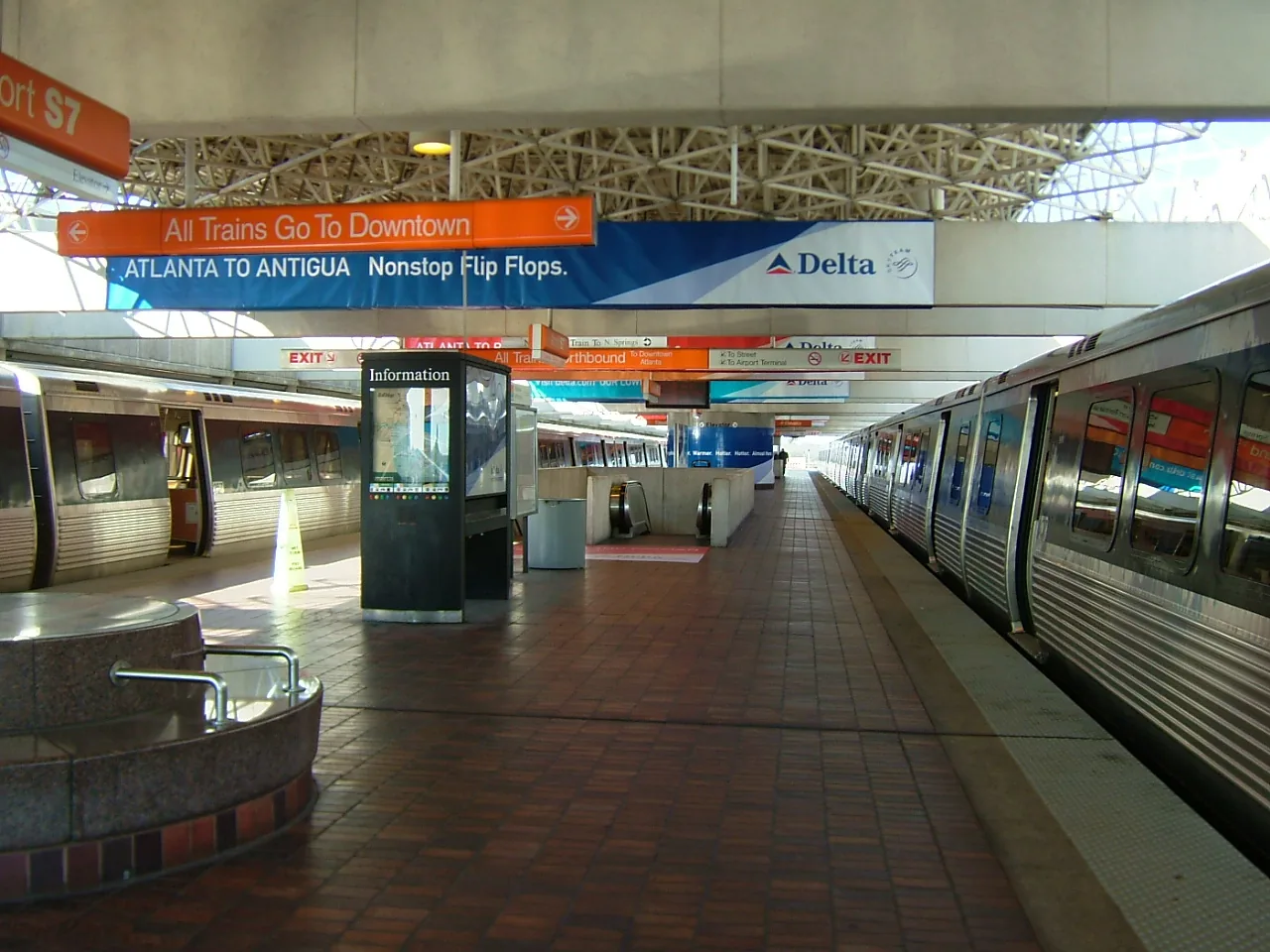
MARTA's Red and Gold lines run straight into the domestic terminal, which sidesteps Atlanta traffic entirely. If you're flying international, note that the international terminal is on the opposite side of the airfield with its own road access and parking.
The moving targets — today’s security waits, parking availability, terminal maps — live on the official ATL site. This page covers the part that doesn’t change: the backward arithmetic from boarding.
Every airport tells you when to arrive. None of them tell you when to get in the shower, and that's the number that decides whether the morning is calm or a scramble. The plan above keeps subtracting past the drive — through packing, through getting ready — until it lands on a start time you can actually act on.
That's what Ready Time does for the whole trip: set boarding as the deadline, list the real steps, and get an alert when each one is due to start. It can even pick the flight up from your calendar.
The standard advice is the right advice here: be at the airport two hours before a domestic flight and three before an international one. At an airport this size those numbers are a floor — they assume the lines are merely normal. ATL is the busiest airport in the world, and it behaves like it: Monday mornings, Sunday evenings, and holiday weeks can double a normal checkpoint line.
The main domestic checkpoint funnels an enormous volume of passengers, and once you're through, the concourses are connected by the Plane Train — getting to a far concourse is its own leg of the trip. Whatever wait you've heard about, treat the 30-minute security row in the plan above as a default to edit, not a promise: TSA PreCheck reliably shrinks it, and a checked bag reliably grows the step before it.
Mostly at the front of the chain. International check-in usually means the airline desk rather than a kiosk — documents get checked, and counters often close an hour before departure — and boarding opens earlier relative to takeoff. Choose “check-in desk” above the plan, give that row room, and take the boarding time from your boarding pass instead of guessing backward from departure. The same choice covers anyone the kiosk can't help: lap infants, unaccompanied minors, oversized bags.
Work backward from boarding, in order: time at the gate, the walk, security, bag drop, parking, then the drive — 25 minutes in the default plan, which you should replace with your route at the hour you'll actually drive it. The calculator above runs the subtraction; the leave-by moment is the first travel row — "Drive to ATL" in the default plan.
That's Ready Time's whole job. Build this plan once in the app and every step gets its own notification at its start time — start packing, leave now, you're at security's mercy from here. It can detect flights from your calendar, and the alerts carry the countdown to boarding.
Not flying? The generic leave time calculator does the same math for any appointment, and the wake-up time calculator runs it all the way back to the alarm.
Plans for the rest of the trip