Enter the kickoff time, adjust the drive, the parking and the tailgate, and see when to leave and when to start getting ready.
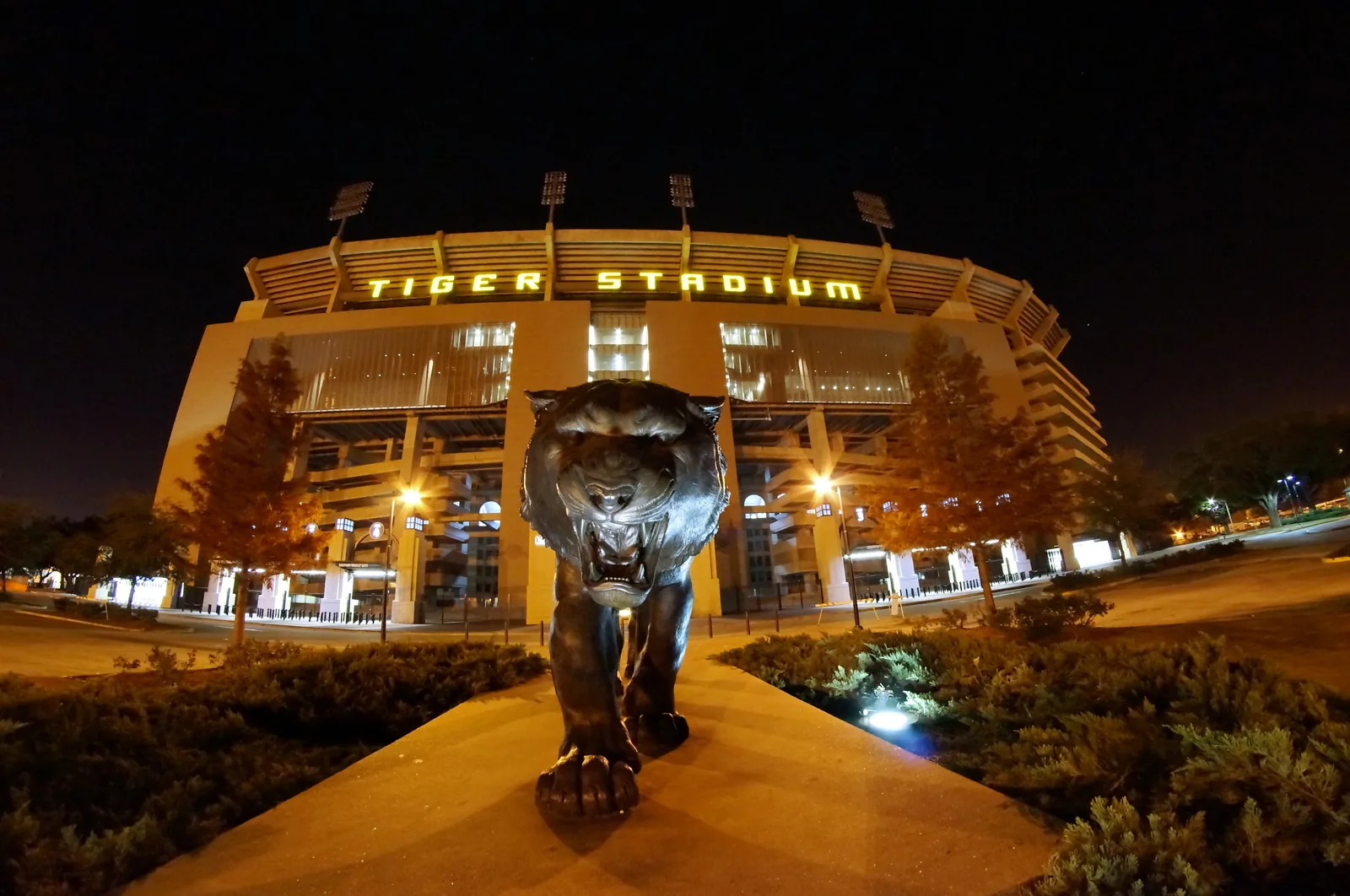
College football game day at Tiger Stadium, home of the LSU Tigers. For a concert here, start from the concert night plan instead: doors and a support act, not gates and kickoff.
Every row is editable. Tap the kickoff or any duration and the plan recomputes backward. The first travel row is your leave-by time.
The 80-minute drive is a typical run from New Orleans without game-day traffic (the optimistic number). In the app, set Tiger Stadium as the destination and Apple Maps fills in the time from where you’re leaving.
Then add for game day: thousands aiming at the same exit and lots (real drive to Tiger Stadium). Change the row and every step before it moves.
The time on your ticket is when the ball is kicked. The anthem and coin toss run before that. Aim for ten to fifteen minutes earlier if you want to be in your seat for any of it.
Gate screening usually decides it. Every big-program college stadium runs walk-through detectors, and the queue is the gap between arriving and being inside. People who miss the start rarely misjudge the drive; they misjudge the lot walk and the line.
Here is the same day drawn to scale. A maps app can number the drive. The rest is the walk in, the gate queue, and finding your seat. A full tailgate is the version worth looking at.
Front door to your seat: 2hr 50min
Kickoff times are TV windows, and which one a given Saturday lands in is usually announced only six to twelve days before the game. Pick yours once it is announced and every step before it moves.
Windows are published in Eastern Time. Tiger Stadium is on Central time, an hour behind, so a noon game does not kick off at noon here:
Weeknight games, season openers and neutral-site games run their own times. Type those in on the kickoff row.
I-10 over the river and the College Drive exits back up first, and LSU has been closing Highland Road through campus to cars without a parking permit from four hours before kickoff. After the game the roads around campus run contraflow outbound for about two hours, so a quick exit means parking toward River Road and taking the longer walk in.
Most campus lots belong to pass holders, and the free lots along River Road and Gourrier Avenue fill by mid morning for a big game, hours before a night kickoff. From the Levee lot the walk in runs twenty minutes or more.
About two hours before kickoff
Gates open at most big college stadiums
That is when you can get in, not when you have to. The official Tiger Stadium site has the real time, which moves for a night game or a TV switch.
Clear-bag policy at most college stadiums, and a few ban bags outright, clear ones included. Getting it wrong usually means walking back to the car and re-entering the line. Check the stadium's page for current sizes rather than a size you remember.
Gates open two hours before kickoff, and the express lanes at several gates take fans carrying no bag at all. The band comes down Victory Hill about an hour and a half before kickoff and the crowd moves with it, so the gate queues spike right after. No re entry, and the stadium is cashless.
A tailgate feels open-ended until it isn't: grill, food, lock the car, walk to the gate with the whole lot. Add one and those steps go in, which means leaving earlier.
Gates, lots and bag rules change; the official site is the live source.
Gates open about two hours before kickoff at most big college stadiums; that is when the crowd starts arriving, not when you have to. Without a tailgate, being through a gate about an hour before kickoff covers screening, the walk to your section, and a stop on the concourse. Most campus lots belong to pass holders, and the free lots along River Road and Gourrier Avenue fill by mid morning for a big game, hours before a night kickoff. From the Levee lot the walk in runs twenty minutes or more.
Work backward from kickoff: minutes in your seat beforehand, walk to your section, gate screening, walk from the lot, parking, then the drive (80 minutes in the default plan). That puts leave-by at 3:55 PM for a 6:30 PM kickoff. Change the kickoff time and every row moves.
It depends on the TV window, which is usually announced six to twelve days before the game. On this stadium's clock: a noon game kicks off at 11:00 AM, the mid-afternoon window at 2:30 PM, a night game at 6:30 PM. This example uses the night game window. Weeknight and neutral-site games run their own times; the kickoff row is editable for those.
The plan allows 15 minutes for a normal walk-through queue. It runs longer in the twenty minutes before kickoff. Arriving fifteen minutes off that peak is usually enough.
Two hours before kickoff is the common practice at big college stadiums. It moves for a night game or a rescheduled kickoff. The official Tiger Stadium site publishes the real time for your game.
A short tailgate adds about an hour and a half; a full one closer to three. For a 6:30 PM kickoff that already means an afternoon in the lot. Watch packing up and the walk to the gate. Those get squeezed when the lot is having a good time.
Assume a clear bag or no bag. Check the stadium's own page for current sizes. The timing risk is being turned around at the gate and walking back to the car: the walk twice and a second trip through the queue.
Flying in? The airport pages. Taking Amtrak? The station pages. No stadium listed? The tailgate timeline is the same plan without a particular lot.
Ready Time keeps the plan and subtracts again when kickoff changes. Put in next week's game and the same steps land on new times, with an alert on each one.
Get a nudge at the right moment, while there's still time to act.
Each step gets its own alert, so you know what's next and how long you have.
“A key part of my planning process. Well worth the investment.”App Store review
Other stadiums